
Muong Hoa Valley Trekking Guide (Lao Chai to Ta Van)
Muong Hoa Valley is the corridor of rice terraces southeast of Sapa town where our half-day, full-day, and homestay treks all run — the difference between routes is how far into the valley you go, not which valley you're in. This guide covers the geography, villages, and trail conditions you'll actually encounter.
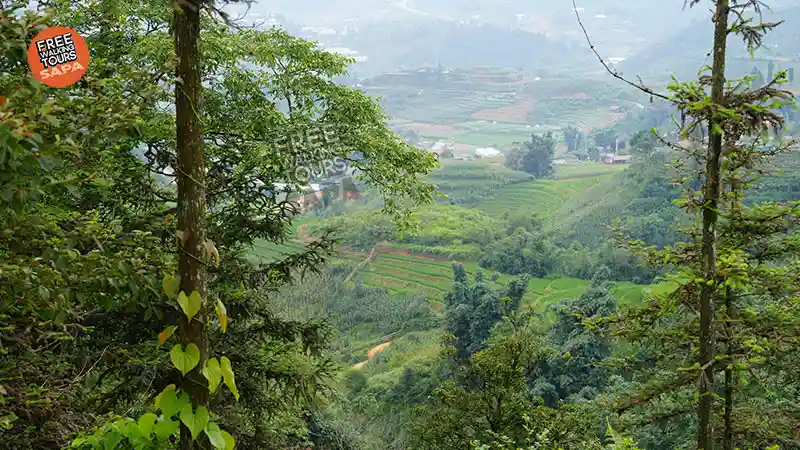
Where Muong Hoa sits
The valley runs southeast from Sapa town toward the Fansipan massif, within Lao Cai province in Vietnam's northern highlands (Vietnam National Tourism — Sapa). Trails drop from the ridge through layered rice terraces — most day-walk routes head downhill from town rather than climbing.
Villages you pass
Lao Chai (Black H'mong): weaving and farming, visited on both the half-day and full-day treks.
Ta Van (Giay): homestays and a quieter valley floor.
Giang Ta Chai (Red Dao): reached only on the 2-day homestay route.
What the trail feels like
Village paths and terrace edges — not mountaineering. Expect mud after rain and dust in the dry season; good footwear matters far more than technical gear. For a shorter taste of similar terrain before committing to a full valley trek, our Countryside Walk covers similar ground on the edge of the valley.
The valley's ancient stone carvings
Scattered boulders in Muong Hoa Valley carry documented archaeological stone carvings — spirals, human figures, and terrace-like patterns whose age and meaning researchers still debate. This is not a UNESCO-listed site; provincial heritage authorities (Lao Cai Portal) document and help protect a number of accessible carvings. Ask your guide to point them out on a full-day or homestay route — they're easy to miss without local knowledge of exactly where to look.
Best seasons in the valley
March–May for green planting; late August–September for golden harvest. See our best time to visit article for a month-by-month breakdown.
Sources & references
We separate our on-the-ground experience from official tourism and operator information. Prices and routes on this site reflect our published tours — not third-party listings.
- Official sourceVietnam National Tourism — Sapa — Destination overview and official tourism context for Lao Cai province.
- Official sourceLao Cai Portal — Provincial government portal for Lao Cai, which administers Sapa district.
Frequently asked questions
- Can I trek Muong Hoa without a guide?
- Paths exist but are easy to lose in mist or at trail junctions near the villages. A local guide adds safety, village access, and context you won't get from a map.
- How far is it from Sapa town?
- Roughly 30–45 minutes on foot to the valley rim; most of your trekking time is spent inside the valley itself.
- Are there ancient carvings in the valley?
- Yes — documented archaeological stone carvings sit on scattered boulders in the valley. They are not a UNESCO-listed site; your guide can point out accessible examples on full-day and homestay routes.
- Which trek covers the most of the valley?
- The full-day trek and the 2-day homestay trek go furthest into the valley; the half-day trek covers Lao Chai and Ta Van near the entrance.