
Sapa Ethnic Groups Guide — Who You Meet on the Trail
On a Sapa valley day you will meet neighbours, not one costume. Black H'mong farm the Lao Chai ridge, Giay sit on the Ta Van floor, Red Dao host many Giang Ta Chai overnights — and Tay, Xa Pho, and Flower H'mong traders appear in town, museums, and Bac Ha. Learn the differences before you ask for a portrait, and the trail starts making sense.
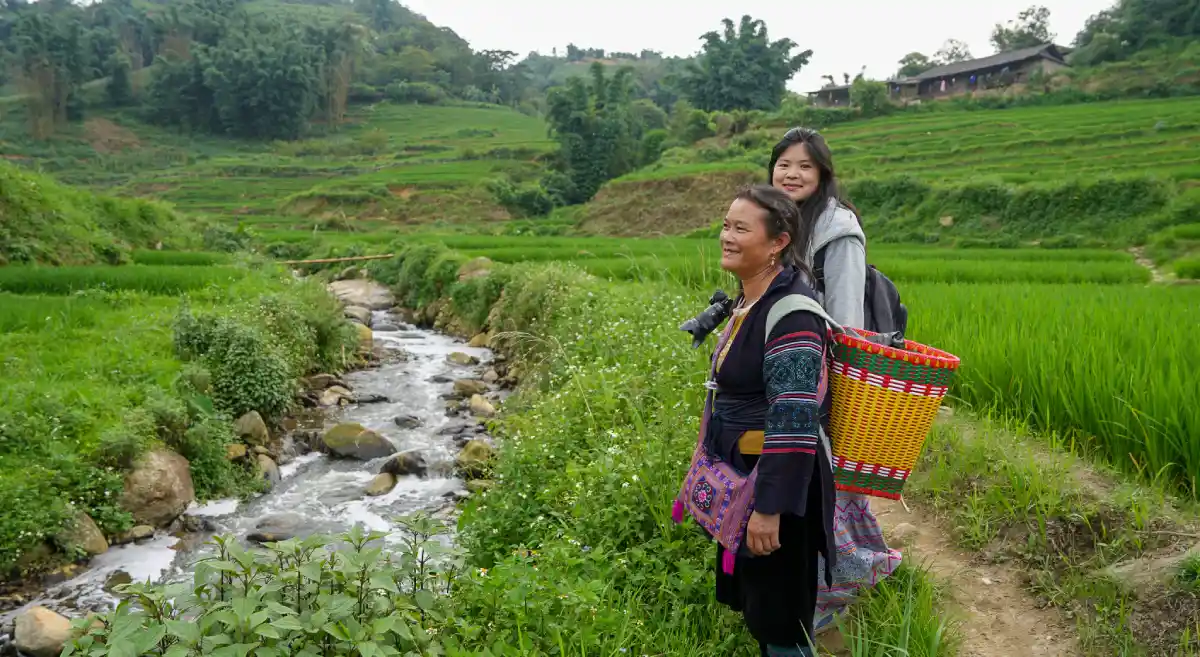
Local expert tips
- →
At the first Lao Chai terrace, ask your guide to name Black H'mong vs the Giay houses you will see lower down — one sentence prevents a morning of wrong labels.
- →
Market sellers in town may follow you with textiles — a clear polite no is fine; buy later with your guide if you want maker-facing stalls.
- →
Homestay dinner: eat what is offered, say thank you through your guide, ask before photographing the kitchen or children.
- →
Do the Town Walk culture museum stop before your first trek — house models for H'mong, Dao, Tay, Giay, and Xa Pho are the dry cheat sheet.
- →
Sunday free? Bac Ha shows Flower H'mong trade dress most visitors never see in Muong Hoa — different chapter, same highland region.
Who lives here — overview for trekkers
Lao Cai's highlands hold many ethnic communities (Vietnam National Tourism — Sapa). On the routes we walk most weeks, three matter first: **Black H'mong**, **Giay**, and **Red Dao**. **Tay** and **Xa Pho** belong to the same mosaic — you meet them more often in town museum displays, wider district travel, and neighbour villages than as the overnight hosts on our standard Muong Hoa day loop.
**What this is not:** one interchangeable 'hill tribe' with costume changes. Languages differ. Houses differ. Headwear differs. Farming elevation often differs.
**What helps on trail:** match the village name to the community before you photograph or buy. Your guide is the bridge — use them.
Community comparison
| Community | Where you usually meet them | Dress cue | Livelihood you may see |
|---|---|---|---|
| Black H'mong | Lao Chai, Suoi Ho, Y Linh Ho | Dark indigo hemp, silver | Ridge terraces, weaving, many guides |
| Giay | Ta Van floor | Quieter daily wear; stilt houses | Wet-rice on flatter valley plots |
| Red Dao | Giang Ta Chai (homestay) | Red headscarves, embroidered jackets | Forest-edge farming, herbal knowledge, hosting |
| Flower H'mong | Bac Ha Sunday market | Bright embroidery | Weekly trade — not Muong Hoa day-trek villages |
| Tay | Wider Lao Cai / museum context | Distinct from H'mong indigo | Neighbour communities; less on our half-day spine |
| Xa Pho | Museum + wider district | Shown in culture museum models | Part of the mosaic; not our main overnight host group |
Entity pages for deeper place context: Black H'mong, Red Dao.
Village-to-community map
| Village / place | Main community | On which experience |
|---|---|---|
| Lao Chai | Black H'mong | Half-day, full-day, homestay Day 1 |
| Ta Van | Giay (H'mong neighbours on slopes) | Half-day, full-day, homestay |
| Y Linh Ho | Black H'mong | Full-day extended loops |
| Giang Ta Chai | Red Dao | Homestay overnight |
| Suoi Ho / Ma Tra | Black H'mong near town | Countryside Walk |
| Bac Ha market | Flower H'mong traders (+ others) | Sunday day trip |
| Sapa town market / square | Mixed — locals + visitors | Town Walk, daily life |
Valley geography: Muong Hoa guide.
Clothing guide — what the dress is telling you
| Cue | Likely community | Traveller note |
|---|---|---|
| Dark indigo cloth, batik, silver | Black H'mong | Everyday work dress for many women — not a show costume |
| Bright multi-colour embroidery | Flower H'mong (esp. Bac Ha) | Market-day visibility; do not assume Lao Chai looks like this |
| Red scarf / red head covering | Red Dao | Strong signal on homestay approaches |
| Stilt-house setting, valley floor | Often Giay households | Dress may be quieter than tourist photos suggest |
Clothes are identity and labour, not a photo prop. Indigo stains hands. Embroidery takes hours. If someone is wearing ceremonial pieces for a festival or wedding, ask your guide before you raise a camera — the answer may be no.
Farming, languages, family, crafts, markets
**Farming** still sets the day. Terraces around Lao Chai and Ta Van are food, not decoration. Harvest weeks put tools and people on the same paths you walk.
**Languages** stay distinct at home. Your guide works in English with you and local languages or Vietnamese with hosts. A short greeting your guide teaches is enough — do not demand a language lesson as entertainment.
**Family life** on a homestay means shared meals, early sleep, shared bathrooms. Read what to expect so you do not arrive expecting a boutique lodge.
**Handicrafts** — indigo and hemp among Black H'mong; embroidery among Dao and Flower H'mong traders. Buy from makers when your guide can point them out. Town stacks of identical scarves are often reseller piles.
**Markets** — Sapa town floors mix local food shopping and visitor textiles. Bac Ha Sunday is the Flower H'mong trade chapter. Detail: markets guide.
**Festivals** — lunar new year and local calendars shift town more than they empty terraces. Ask your guide what is happening that week instead of assuming a nightly 'Love Market ritual.'
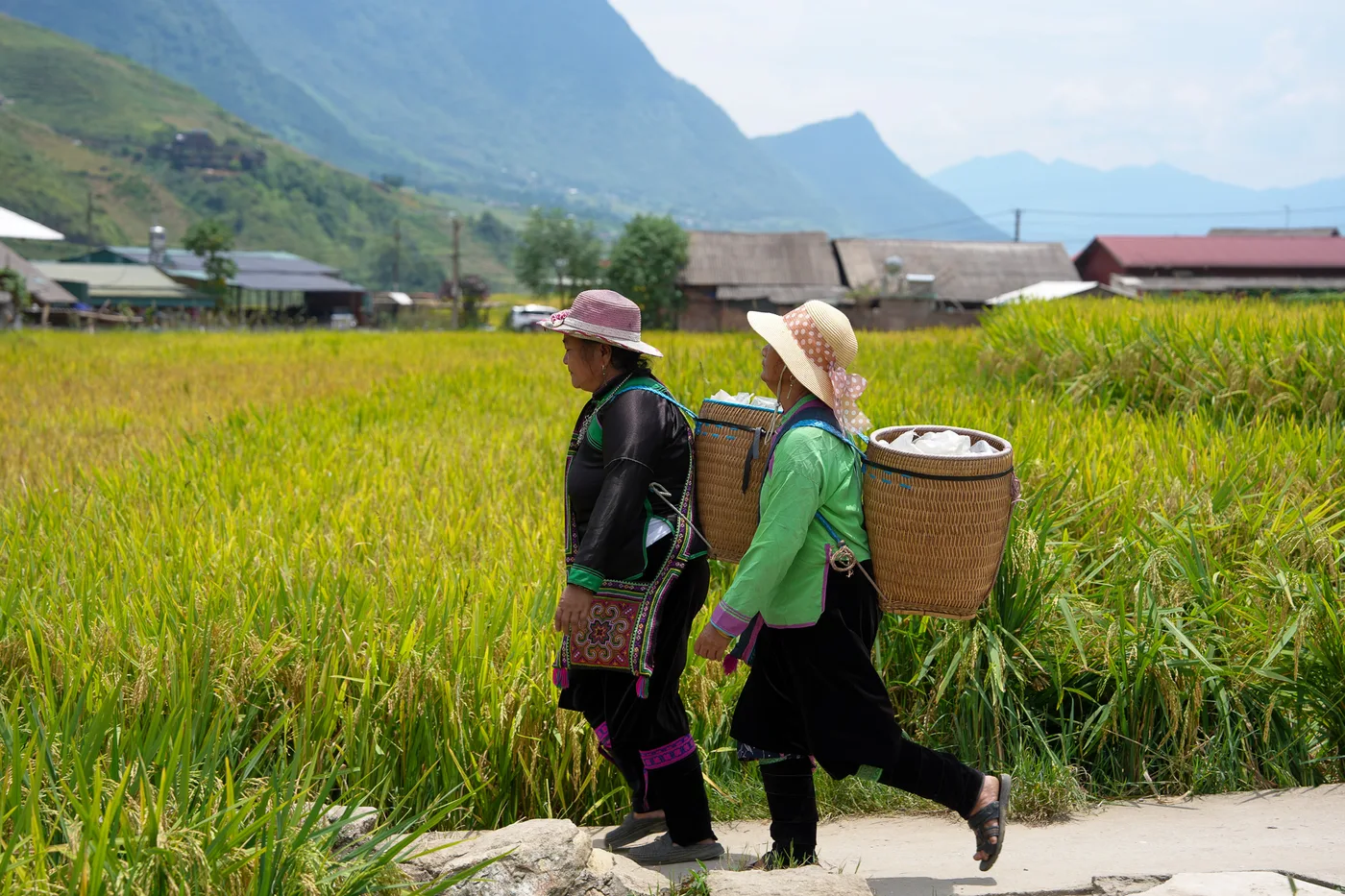
Cultural and photography etiquette checklist
**Do** - Walk with a licensed guide on village paths - Ask before close portraits — especially elders and children - Accept no without arguing - Stay on stone edges; paddies are crops - Remove shoes if invited indoors and told to - Pay agreed prices; tip only if you choose
**Do not** - Enter homes or courtyards uninvited - Touch altars, ceremonial cloth, or jewellery on someone's body - Hand candy to children without asking a parent or guide - Film people eating or washing as if they were exhibits - Chase sellers who already declined
**Photo rule Thong uses:** public path scene from a distance — usually fine. Face-filling portrait — ask. Inside a kitchen — ask twice.
Responsible booking context: how to book safely.
Myths and misconceptions
| Myth | Better sentence |
|---|---|
| 'Everyone here is the same hill tribe' | Multiple communities, languages, and villages |
| 'Indigo means Red Dao' | Indigo is strongly Black H'mong; Red Dao signal is often the red headscarf |
| 'Villages exist for tourism' | Farming continues; guiding and homestays sit beside it |
| 'Homestay = hotel comfort' | Family house, shared facilities, early rhythms |
| 'Bac Ha is just like Lao Chai' | Flower H'mong market town ~2.5 hours away — different dress story |
History layer behind highland communities and the French town: Sapa history.
Real traveller scenarios
| You want… | Do this |
|---|---|
| Names before the mud | Town Walk museum + viewpoint, then half-day |
| Two communities in one morning | Half-day Lao Chai + Ta Van |
| Overnight family time | Homestay toward Giang Ta Chai |
| Near-town indigo / quieter paths | Countryside Suoi Ho–Ma Tra |
| Bright market embroidery | Bac Ha on Sunday |
| Photos without being rude | Ask; buy from makers; skip stealth zooms |
Village life overnight: homestay village life.
Sources & references
We separate our on-the-ground experience from official tourism and operator information. Prices and routes on this site reflect our published tours — not third-party listings.
- Official sourceVietnam National Tourism — Sapa — Destination overview and official tourism context for Lao Cai province.
- Official sourceLao Cai Portal — Provincial government portal for Lao Cai, which administers Sapa district.
- Our experienceSapaTreks guide team — Village etiquette and community notes from guides who lead Muong Hoa and countryside routes weekly, including Thong.
Common mistakes to avoid
- ✕Calling every indigo outfit the same 'tribe' — Black H'mong, Red Dao, Giay, and Tay are distinct.
- ✕Treating ceremonial or everyday dress as a costume for your camera — ask, then accept no.
- ✕Expecting staged dancing on every half-day — most days you see farming and household work.
- ✕Bargaining hard on hand embroidery as if it were factory cloth — time is the material.
- ✕Entering a courtyard or kitchen because the door is open — wait for an invitation through your guide.
Frequently asked questions
- Which ethnic groups live in Sapa?
- Many communities live across Lao Cai. On typical Muong Hoa treks you mainly meet Black H'mong, Giay, and Red Dao. Tay and Xa Pho are part of the wider mosaic; Flower H'mong traders are prominent at Bac Ha Sunday market.
- Which villages belong to which communities?
- Lao Chai, Suoi Ho, and Y Linh Ho are mainly Black H'mong. Ta Van is mainly Giay on the valley floor. Giang Ta Chai is Red Dao on our homestay route. Bac Ha Sunday market is known for Flower H'mong traders.
- What is the difference between Black H'mong and Flower H'mong?
- Black H'mong around Sapa valleys often wear dark indigo hemp. Flower H'mong traders at Bac Ha are known for bright embroidery. Related peoples, different dress and places you meet them.
- Can I visit a homestay with a Red Dao family?
- Yes on our 2-day homestay trek toward Giang Ta Chai. It is a family house with shared facilities — read the homestay guide before you book so expectations match reality.
- Is it okay to photograph people in traditional dress?
- Ask first for close portraits, especially of elders and children. Distant path scenes are usually easier. Accept no without pressure.
- Do people still farm, or is it only tourism?
- Farming continues. Guiding, textiles, and homestays add income. Treat terraces and paths as workplaces, not a theme park.
- What languages will I hear?
- Community languages at home, Vietnamese widely, English with your guide. A short local greeting your guide teaches is welcome; do not treat language as a performance request.
- How should I behave in a village?
- Stay with your guide, ask before photos, do not enter homes uninvited, keep to paths, and buy thoughtfully. Polite declines are fine with sellers.
- Where can I learn the basics before trekking?
- The Town Walk culture museum covers house models and dress for H'mong, Dao, Tay, Giay, and Xa Pho — useful the afternoon before your first valley day.