
Best Time to Visit Sapa — Choose the Month That Matches You
There is no single perfect month for Sapa — only the month that matches what you came for. Late August and September bring the golden rice most people picture; March to May bring fresh green planting and quieter paths; summer is lush and wetter; winter is misty, cool, and calm. Pick the season for your priority, then pack and book for that weather.
Local expert tips
- →
Email harvest-week dates in August if gold is your only goal — guides fill before the colour peaks.
- →
Ask for green-and-gold in late July–early August near Lao Chai if you want layered colour without peak crowds.
- →
Rain jacket every season May–August; grip shoes every season after overnight rain.
- →
Photography priority → slower full-day over a rushed half-day when light is changing.
- →
Families new to hills: spring or autumn half-day after a Town Walk — not your first muddy summer full-day.
Best time for… — decide by priority
Start here. The month is the answer to a question, not a trophy.
| If you care most about… | Lean toward | Why |
|---|---|---|
| Golden rice photos | Late Aug–Sep (or late Jul–early Aug mix) | Amber paddies before / during harvest |
| Fresh green terraces | Mar–May | Planting colour, often quieter |
| Comfortable walking weather | Mar–May or Sep–Nov | Mild days for most guests |
| Fewer crowds | Jan–Feb or midweek Mar–Apr | Quieter paths and town |
| Homestay village energy | Planting or harvest weeks | Work visible on trail |
| Families / first hills | Mar–May or Sep–Oct | Avoid first trip in heavy mud if you can |
| Mist and mood photos | Dec–Feb | Fallow terraces, cloud in the valley |
| Fansipan summit odds | Autumn or spring clear spells | Separate from terrace gold |
Deep terrace context: rice terraces guide.
Four seasons in plain guide language
**Spring (Mar–May)** — Fresh green after planting. Mild days, cool evenings. Good first-trek window. Paths can still wet after showers.
**Summer (Jun–Aug)** — Tall deep-green rice. Warm. Afternoon rain common. Mud after storms. Lush, dramatic skies if you start early.
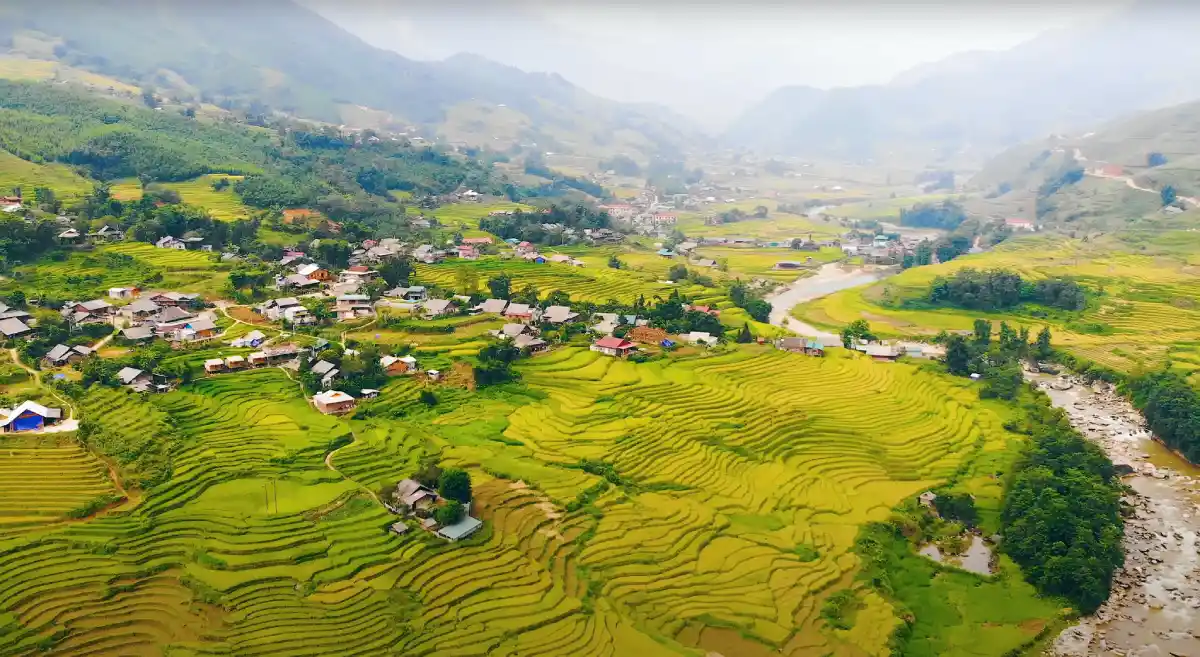
**Harvest / autumn edge (late Aug–Nov)** — Gold then stubble and clearer mornings. September is the busy photographer month. October–November often clearer and still pleasant.
**Winter (Dec–Feb)** — Cool, misty, quieter. Terraces brown or fallow. Town feels calmer. Pack warm layers; frost can slick morning stone.
None of these close the valley. They change what you see and how carefully you walk (Vietnam National Tourism — Sapa).
Month-by-month comparison
| Month | Terrace look | Trekking feel | Crowds | Pack note |
|---|---|---|---|---|
| Jan | Fallow / brown, mist | Cool, atmospheric | Low | Warm jacket |
| Feb | Fallow, mist | Cool | Low | Warm layers |
| Mar | Fresh green starts | Mild, good walking | Rising | Light fleece |
| Apr | Green planting | Comfortable | Medium | Sun + light rain shell |
| May | Green, showers increase | Good mornings | Medium | Rain jacket |
| Jun | Deep green | Warm, wet afternoons | Medium | Waterproof shoes |
| Jul | Deep green → early gold mix | Warm, storms | Medium–high | Pack liner |
| Aug | Green-gold → gold | Warm, busy late month | High late | Book ahead |
| Sep | Golden harvest | Peak photo demand | Highest | Confirm guides early |
| Oct | Post-harvest / clearer | Pleasant | Medium–high | Layers for mornings |
| Nov | Cooler, clearer spells | Comfortable | Medium | Light warm layer |
| Dec | Mist, cold nights | Quiet, careful stone | Low | Gloves optional |
Daytime in the main trekking windows often sits roughly 18–24°C; winter days can sit nearer 8–15°C. Treat numbers as a guide, not a promise — elevation and cloud change the feel fast.
Rice terraces and harvest timing
Muong Hoa terraces are working wet-rice fields, not a fixed backdrop. Plant in spring, grow through summer rain, turn gold before harvest, then fallow in winter (Lao Cai Portal).
**Elevation matters.** What is gold on the Ta Van floor may still be green higher toward Lao Chai. Su's usual photographer note: late July–early August green-and-gold mix often beats a single flat shade of amber.
**Harvest weeks** put more people on popular edges. Stay on stone paths, step aside for buffalo, and do not block cutting work — detail in the rice terraces guide.
Village-by-village walking context: Muong Hoa Valley guide.
Trek difficulty and route fit by season
| Season | Path difficulty feel | Route tip |
|---|---|---|
| Mar–May | Moderate, usually manageable mud | Half-day or full-day both fine |
| Jun–Aug | Harder after rain — slick stone | Early start; grip shoes non-negotiable |
| Late Aug–Sep | Busy + still possible wet sections | Full-day if photos are the goal |
| Oct–Nov | Often clearer mornings | Good all-route window |
| Dec–Feb | Cold + occasional frost slick | Shorter valley or town first |
| Goal | Suggested first booking |
|---|---|
| First visit, any mild month | Half-Day after Town Walk (from $15/person) |
| Maximum terrace time | Full-Day |
| Overnight village | Homestay in planting or harvest |
| Near-town intro | Countryside Walk |
| Summit question | Fansipan — separate weather logic |
Compare lengths: half-day vs full-day. First-timer framing: best trek for first-timers.
Photographer recommendations
- **Gold:** late August–September; book the guide early; consider full-day for changing light
- **Layered colour:** late July–early August green-and-gold near Lao Chai
- **Fresh green:** March–May mornings
- **Mood / mist:** December–February — expect brown paddies, not amber
- **Summer drama:** tall green + cloud, shoot early before storms
Respectful portraits and gear weight: photography guide. Do not leave the path for one frame after rain — safety guide.
Families, crowds, and festival timing
**Families** — Spring and autumn half-days are the usual first ask. Summer mud is doable with good shoes and patience; winter needs warmer clothes for kids who stop moving at viewpoints. More pacing detail: families & solo.
**Crowds** — Highest late August–September on classic Muong Hoa edges and in town. Midweek spring and deep winter feel quieter.
**Festivals and market colour** — Lunar dates move. Bac Ha's Sunday market rhythm is weekly, not seasonal gold. Love Market energy is a Saturday-evening town story — see markets guide. Do not plan a whole trip around a festival date without checking that year's calendar with your hotel or guide.
**Homestays** — Planting and harvest overnight stays show more farm work; winter homestays are quieter and colder at night — still valid if you want village calm.
Seasonal packing notes
| Season | Emphasise |
|---|---|
| Mar–May | Light fleece, sun hat, compact rain shell |
| Jun–Aug | Waterproof shoes, pack liner, quick-dry shirt |
| Harvest weeks | Extra battery, confirmed booking, still a rain jacket |
| Dec–Feb | Warm jacket, thicker socks, careful morning steps |
Year-round non-negotiables — grip shoes, rain jacket, water — live in the packing guide.
Common misconceptions
| Myth | Better sentence |
|---|---|
| 'September is the only time worth visiting' | Green, mist, and quiet each make a real trip |
| 'Summer is closed for trekking' | Treks run; start early and wear grip shoes |
| 'All terraces gold the same day' | Elevation shifts colour by days or weeks |
| 'Winter has nothing to see' | Mist and empty paths — different brief |
| 'Best time means perfect weather' | Mountains keep their own schedule |
Transport into town before you obsess over terrace colour: Hanoi to Sapa.
Real traveller scenarios
| You are… | Month logic |
|---|---|
| First-timer with one valley day | Mar–May or Sep–Oct + half-day |
| Photographer chasing gold | Late Aug–Sep; email early; full-day |
| Photographer who likes mix | Late Jul–early Aug |
| Family with kids 7–12 | Spring or autumn; avoid first trip in peak mud |
| Hate crowds | Jan–Feb or midweek spring |
| Homestay curiosity | Planting or harvest weeks |
| Only free dates are July | Go — deep green, early starts, rain kit |
| Only free dates are January | Go — mist trip, warm layers, shorter days OK |
Prices for published valley treks are quoted the same way year-round (half-day $25 · full-day $55 · homestay $95 per person (min 2)); availability, not the menu price, is what tightens in harvest weeks.
Sources & references
We separate our on-the-ground experience from official tourism and operator information. Prices and routes on this site reflect our published tours — not third-party listings.
- Official sourceVietnam National Tourism — Sapa — Destination overview and official tourism context for Lao Cai province.
- Official sourceLao Cai Portal — Provincial government portal for Lao Cai, which administers Sapa district.
- Our experienceSapaTreks guide team — Season and harvest timing notes from guides who lead valley days year-round, including Su.
- OperatorSapa rice terraces guide — Terrace cycle and responsible path behaviour.
Common mistakes to avoid
- ✕Expecting every terrace in the valley to turn gold the same week.
- ✕Skipping rain gear in June–August because a weather app showed a sunny morning.
- ✕Booking harvest week the night before without email confirmation.
- ✕Visiting only for gold and dismissing March–May green as 'not Sapa'.
- ✕Arriving in January expecting amber paddies — winter is a different, quieter trip.
Frequently asked questions
- What is the best time to visit Sapa?
- It depends on your priority. Golden terraces favour late August–September; green planting favours March–May; many guests find March–May and September–November most comfortable for walking. Winter is quieter and mistier.
- When are the rice terraces golden?
- Usually late August through September, varying by village elevation. Late July to early August often shows a green-and-gold mix many photographers prefer.
- Is summer too rainy to trek?
- Treks still run. Afternoon showers are common June–August. Start early, wear shoes with grip, and carry a real rain jacket. Light rain alone is not usually a cancel day.
- What is winter like in Sapa?
- Cool and often misty, with quieter trails and brown or fallow terraces. Daytime walking is still possible with warm layers. Expect atmosphere, not harvest gold.
- Which month is best for a first trek?
- March–May and September–November balance comfort with green or golden colour for most first-timers. Pair with a Town Walk, then a half-day valley trek.
- When should families visit?
- Spring and autumn half-days are the usual first recommendation. Summer works with good footwear and patience; winter needs warmer clothes for children who cool down at viewpoints.
- Do prices rise in peak season?
- Published valley treks are quoted the same way year-round — half-day from $25/person, full-day from $55/person, homestay from $95/person (minimum 2 guests). Harvest weeks tighten guide availability — book by email ahead.
- Is cloudy weather a bad time?
- Cloud and mist are part of highland Sapa, especially in winter and on summer afternoons. They change photos and temperature more than they cancel a guided village walk.