
Sapa Rice Terraces Guide — Living Farmland, Not a Backdrop
The terraces you came to photograph are wet-rice fields first. Families carved and still maintain them across Muong Hoa so steep ground can feed households. Colour changes because the crop moves — flooded mirrors, green planting, tall summer rice, gold before harvest, then fallow brown. Walk them as farmland and the scenery makes sense.
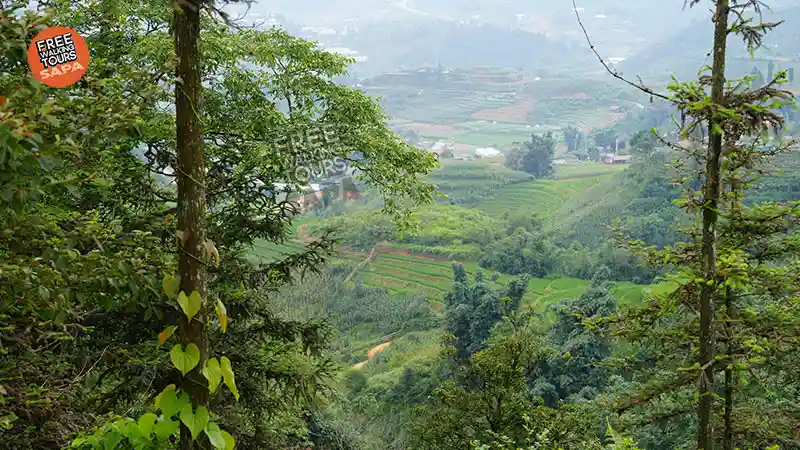
Local expert tips
- →
At the first open terrace above Lao Chai, look at the water gates and wall height before you raise a camera — that is how the system works.
- →
If gold is non-negotiable, email in August and keep a buffer day; ask what colour the fields are that week, not only the month.
- →
Green planting weeks show labour clearly — transplanting and muddy bunds, fewer harvest crowds.
- →
After rain, the flat mud in a paddy looks inviting and swallows shoes — stay on the stone lip.
- →
Near-town terrace edges without a full valley drop: Countryside Walk toward Suoi Ho.
Why the terraces exist (and why they are famous)
Steep highland slopes do not hold flat wet-rice fields on their own. Contour terraces — stone or packed earth walls, level pads, water gated from higher streams — let households grow rice where a single slope would shed water and soil (Vietnam National Tourism — Sapa).
**Why travellers know them:** the stacked layers photograph clearly, especially in green planting and pre-harvest gold. **Why they matter here:** they are still food production for Black H'mong, Giay, and neighbouring communities along Muong Hoa and nearby valleys.
Fame did not invent the walls. Farming did. Tourism arrived later and walks the same bunds farmers use to move water, tools, and buffalo.
The rice terraces entity page is the short place summary; this guide is the farming and walking briefing.
How they were built and how they still work
You will not get a single founding year on a plaque. What you can see on trail is the engineering logic:
1. **Contour walls** — hold soil and create a level pad 2. **Water intake** — streams and channels from higher ground 3. **Gates and spills** — move water pad to pad without washing the wall out 4. **Maintenance** — walls crack, silt builds, channels clog; families repair them between seasons
Hand planting and hand harvest still dominate the corridors we walk. Machinery fits poorly on narrow bunds. When you see people bent over green shoots in March–May, or sickles in late summer, that is the system running — not a demonstration scheduled for your group.
Provincial heritage notes in the valley also include carved boulders near ordinary paths (Lao Cai Portal) — related landscape history, separate from the rice itself. Ask your guide if you want that stop; do not scrub the rock for a cleaner photo.
Rice-cycle timeline
| Stage | Rough timing | What the land is doing | What you notice on foot |
|---|---|---|---|
| Prepare / flood | Late dry → early wet transition | Pads filled, soil worked | Mirror water when calm; careful footing |
| Plant / transplant | ~Mar–May | Seedlings into wet pads | Fresh green; busy labour on bunds |
| Grow | ~Jun–Aug | Tall rice, monsoon rain | Deep green; afternoon storms common |
| Ripen / harvest | ~Late Aug–Sep (shifts by elevation) | Gold, then cutting and drying | Sickles, tarps, busier paths |
| Fallow / winter | ~Oct–Feb | Stubble, brown, empty pads | Structure of the walls; mist; quieter fields |
**Elevation rule Su uses:** lower Ta Van floor often leads upper Lao Chai ridge by days or a week at harvest. One Instagram date does not paint the whole valley.
Trip-month weather and crowds (hotels, trains, town): best time to visit — that page is the whole-trip calendar; this table is the crop.
Seasonal comparison — why the look changes
| Period | Terrace look | Farming reality | Trekking note |
|---|---|---|---|
| Mar–May | Fresh green | Planting labour | Mild; strong first terrace day |
| Jun–Aug | Deep green | Growth + rain | Start mornings; rain cover |
| Late Aug–Sep | Gold / mixed gold-green | Harvest | Busiest cameras; book ahead |
| Oct–Nov | Stubble / brown transition | Post-harvest | Clear spells; honest structure |
| Dec–Feb | Fallow, mist | Rest / prep | Cold ridge air; mood over colour |
Appearance changes because water, plant height, and harvest remove the crop — not because someone flips a scenic switch. Winter is not 'closed terraces.' It is a different crop stage.
Best viewpoints by season
| Viewpoint | Strongest when | What you are looking at |
|---|---|---|
| First terrace edge above Lao Chai | Clear morning any season | Corridor orientation — layers before close-ups |
| Mid-ridge Lao Chai paths | Green Mar–May; gold late Aug–Sep | Classic stacked paddies |
| Ta Van floor openings | Soft light; harvest or green | Wider bowl; houses + pads in one frame |
| Stream / bund crossings | After light rain (footing first) | Reflections in flood stage |
| Homestay dawn approaches | Overnight guests | Mist texture over paddies before day groups |
| Town café / ridge above Sapa town | Clear days | Orientation only — not a substitute for walking |
Village choice and crowd feel: villages guide. Light, gear, and portrait etiquette: photography guide — keep this page about the farmland.
Trek routes through terrace landscapes
| Route | Terrace ground you walk | Hours among paddies | Choose when… |
|---|---|---|---|
| Half-Day | Lao Chai + Ta Van spine | Morning into early afternoon | First terrace day; need the afternoon |
| Full-Day | Same spine + longer loops / hamlets such as Y Linh Ho | Most of the day | Waiting for light; more bund time |
| Homestay | Day spine + overnight approaches; dawn paddies | Two days | Mist morning + Red Dao overnight chapter |
| Countryside | Near-town edges (Suoi Ho / Ma Tra) | ~3 hrs | Lighter day; less Muong Hoa depth |
Same farmland corridor — different hours. Day-length decision: half-day vs full-day. Valley underfoot: Muong Hoa guide. Overnight honesty: homestay what to expect.
| 2026 from-price (min. 2) | |
|---|---|
| Half-day | $25/person |
| Full-day | $55/person |
| Homestay | $95/person |
| Countryside | $15/person |
Photography on the terraces — brief notes
Colour timing and waiting for mist matter more than lens brand. Vertical frames often hold stacked layers better than wide horizontals. Shoot from the path.
**Do not duplicate a full gear essay here.** For sunrise vs sunset, kit weight, drones, and portrait consent detail, use the photography guide.
Farm-specific rule: if harvest is happening, finish your frame fast and clear the bund. Grain moves; your composition can wait.
Village differences you notice in the fields
Terraces look similar from a drone. On foot, ridge and floor farm differently:
- **Lao Chai** — steeper ridge pads, Black H'mong household fields, busiest mid-morning trek stretch
- **Ta Van** — wider floor, Giay wet-rice plots, softer open light
- **Giang Ta Chai** — overnight approaches; forest-edge farming beside Red Dao hosting
- **Suoi Ho / Ma Tra** — near-town pads; shorter walk, less corridor depth
Who farms where (communities, dress, etiquette depth): ethnic groups guide. Which village fits your hours: villages guide.
Responsible visitor checklist
**Do** - Stay on stone edges and dirt paths your guide uses - Step aside for buffalo, harvest loads, and farmers - Ask before close portraits of people working - Carry rubbish out - Accept mud and weather as part of farmland access
**Do not** - Walk through flooded or planted paddies for a photo - Sit on freshly repaired walls - Pick rice, flowers, or 'souvenir' seedlings - Block a harvest line with a group selfie - Fly a drone over working fields without clear permission
Booking and operator basics: how to book safely.
Sources & references
We separate our on-the-ground experience from official tourism and operator information. Prices and routes on this site reflect our published tours — not third-party listings.
- Official sourceVietnam National Tourism — Sapa — Destination overview and official tourism context for Lao Cai province.
- Official sourceLao Cai Portal — Provincial government portal for Lao Cai, which administers Sapa district.
- Our experienceSapaTreks guide team — Farming-calendar and path notes from guides who walk Muong Hoa weekly, including Su.
- OperatorHalf-Day Easy Trek — Published Lao Chai–Ta Van terrace day.
- OperatorFull-Day Valley Trek — Longer hours among the same terrace corridor.
Common mistakes to avoid
- ✕Treating terraces as a park backdrop instead of someone's rice calendar.
- ✕Expecting the whole valley to turn gold on the same weekend.
- ✕Stepping into flooded paddies for a slightly better angle.
- ✕Blocking harvest paths with tripods or group photos while people carry grain.
- ✕Confusing a town café viewpoint with walking the working terraces.
Frequently asked questions
- Why are Sapa rice terraces famous?
- They are steep wet-rice landscapes that photograph as clear stacked layers — especially green planting and pre-harvest gold — while remaining working farmland for highland communities in Muong Hoa and nearby valleys.
- How were the terraces built?
- Households cut contour pads into the slope and hold them with stone or packed walls, then gate water from higher streams pad to pad. Maintenance is ongoing. You see the logic on trail more clearly than on a founding plaque.
- What is the rice growing cycle in Sapa?
- Roughly: flood and prepare, plant or transplant in March–May, grow through summer rains, harvest around late August–September depending on elevation, then fallow or brown through winter. Exact weeks shift within the same valley.
- When is harvest season for the terraces?
- Usually late August through September, with floor villages sometimes ahead of higher ridge paddies. Early August often shows a green-and-gold mix. Ask what the fields look like the week you travel.
- When is the green season?
- Fresh planting green is strongest around March–May. June–August is deeper, taller green with more afternoon rain.
- Which trek is best for rice terrace views?
- Half-day (from $25/person) covers the classic Lao Chai–Ta Van layers. Full-day (from $55/person) buys more hours and secondary ground. Homestay adds dawn mist. Countryside is a lighter near-town option.
- Can I see terraces without a long trek?
- Town ridge viewpoints and the Countryside Walk show terrace edges. Deep layered farmland still means walking into Muong Hoa on a half-day or longer.
- Are Sapa terraces UNESCO listed?
- They are culturally significant working landscapes, but not a separate UNESCO rice-terrace listing. Provincial heritage also documents related valley features such as stone carvings.
- How should I behave around working farmland?
- Stay on paths, give way to livestock and harvest work, ask before close photos, and never cut through planted or flooded paddies for a better angle.