
Sapa Photography Guide — Light, Terraces & Working Respectfully
Strong Sapa photographs come from timing and access more than from a new lens. Mist in Muong Hoa, the rice cycle on the terraces, and a guide who will wait at a viewpoint beat rushing three villages with a heavy bag. This page is how our team plans light with guests — and how to keep people and paddies out of the way of your frame.
Local expert tips
- →
At the first open terrace above Lao Chai, ask your guide which ridge is Ta Van — then decide whether to push or wait for a cloud break.
- →
If harvest colour is your reason for the trip, email dates early and accept a buffer day for rain.
- →
One body + one versatile zoom (or a phone) beats three lenses you will not swap on muddy steps.
- →
Market and square shots after a Town Walk teach scale before you drop into the valley.
- →
When someone is working a field, shoot wide from the path first — close faces come only after a clear yes.
How light actually works here
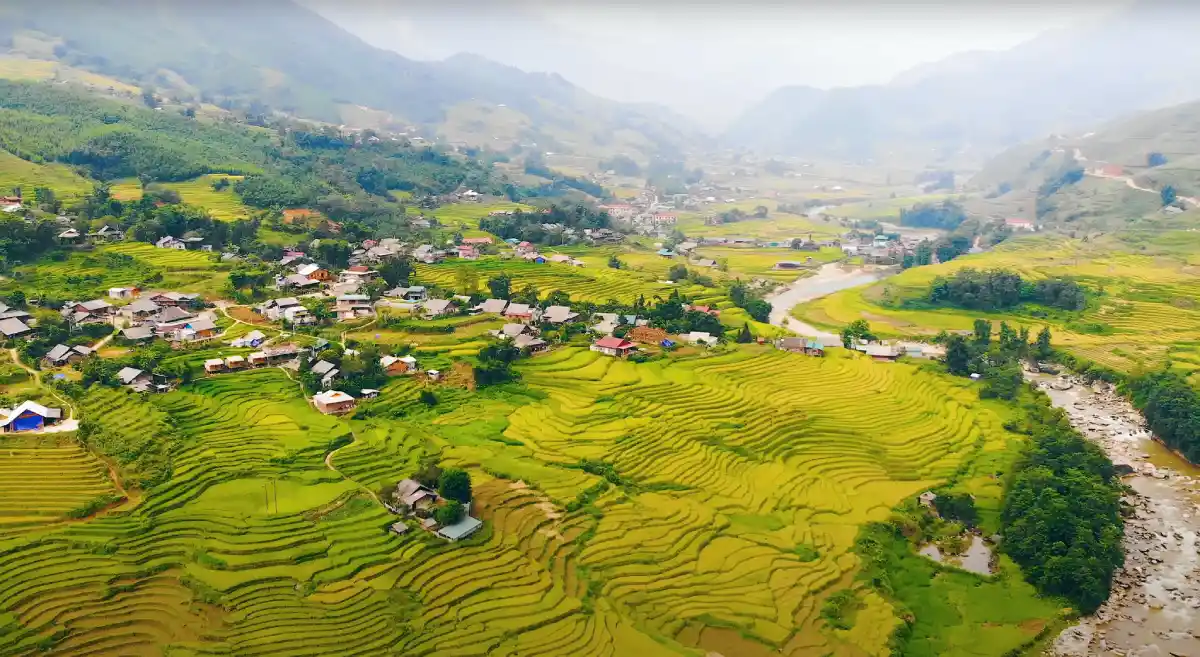
Sapa sits above Muong Hoa. Most of the photographs people want are not from the hotel balcony — they are from terrace paths between Lao Chai and Ta Van, where layers stack when mist sits and colour when rice turns (Vietnam National Tourism — Sapa).
Three variables matter more than brand of camera:
1. **Rice stage** — flooded mirrors, green growth, gold harvest, or brown fallow 2. **Cloud height** — valley fog that lifts by mid-morning vs flat grey all day 3. **Hours on trail** — enough time to wait, or only enough time to pass through
Town has its own chapter: Stone Church stone, market floors, evening square. That is orientation and street texture — useful, different from terrace depth. Start with a Town Walk if you arrive needing names; shoot the valley when your legs and weather allow.
Season planning detail: best time to visit. Terrace agriculture context: rice terraces guide.
Best viewpoints (practical table)
| Place | What you usually get | Best access | Notes |
|---|---|---|---|
| Lao Chai ridge approaches | Classic layered terraces + village roofs | Half-day / full-day | First big 'this is Sapa' frame for most guests |
| Ta Van valley floor edges | Wider bowl, stilt-house context | Half-day finish / full-day linger | Mai's waiting spot when cloud gaps matter |
| Suoi Ho / Ma Tra near town | Near-town terraces + indigo work when available | Countryside Walk | Shorter day; less depth than Muong Hoa |
| Homestay village dawn | Mist over paddies before day-trippers | 2-Day Homestay | Dawn without a pre-dawn taxi from town |
| Town café / ridge above square | Orientation view of the valley | Town Walk finish | Learn names; not a substitute for trail layers |
| Fansipan / Hoang Lien high ground | Summit or ridge when clear | Fansipan 2D1N or cable access | Different subject — mountain, not terrace farming |
Route geography: Muong Hoa trekking guide.
Seasonal photography calendar
| Months | Terrace look | Light & weather | Photography note |
|---|---|---|---|
| Mar–May | Fresh green, planting busy | Often clearer mornings | Strong all-round colour; book if you want green |
| Jun–Aug | Deep green | Afternoon storms common | Shoot mornings; pack rain cover |
| Late Aug–Sep | Gold / harvest | Busy trails, variable cloud | Iconic colour — elevation shifts exact weeks |
| Oct–Nov | Post-harvest browns, clearer air some days | Cooler | Structure and sky; less 'postcard green' |
| Dec–Feb | Fallow, heavy mist | Cold; fewer clear Fansipan days | Mood and mono; dress warm; wait for lifts |
Harvest is not one fixed Monday across every village. Lower and higher terraces turn on different clocks. If gold is non-negotiable, tell us in the booking email and keep a spare day.
Sunrise vs sunset
| Sunrise / early morning | Late afternoon / sunset | |
|---|---|---|
| Mist | Often sits in the valley — layers pop when it lifts | Haze or storm build more common in wet months |
| Terrace colour | Soft side light on green or gold | Warm if sky opens; grey if cloud seals |
| Access from town | Needs early start or overnight in valley | Fits a standard day trek finish if weather cooperates |
| Crowds | Quieter paths early | More groups on classic viewpoints |
| Best fit | Homestay dawn; early half-day/full-day | Full-day linger; town square after valley day |
**Honest limit:** we do not sell a guaranteed sunrise. We sell a start time and a place to stand. Weather decides the file.
If you only have one valley morning, prioritise an early half-day over hoping for sunset on a short loop. Compare day length: half-day vs full-day.
Photographing the rice cycle
Terraces are working farmland, not a set. The same path looks different because the crop changes:
- **Flooded / mirror stage** — reflections when wind is calm; careful footing on bunds
- **Young green** — clean colour, busy planting labour
- **Mature green** — depth and cloud drama in summer
- **Gold harvest** — the colour most people chase; sickles and drying stalks in frame
- **Fallow / brown** — shape of the land without the postcard filter
Composition that works here is simple: foreground terrace edge, mid-ground village or tree line, background ridge or mist. Vertical frames often beat horizontals when layers stack tightly.
Do not step into wet rice for a centimetre of angle. Shoot from stone and path. Your guide will stop you if you drift — listen.
Portraits and village photography
Indigo cloth and red headscarves read well on camera. That does not make a person available.
**Mai's field rule:** wide scene from the path — usually fine. Face-filling portrait — ask. Kitchen or children — ask, and accept no without bargaining.
Know who you are looking at before you label a caption. Black H'mong around Lao Chai is not Flower H'mong at Bac Ha, and Red Dao on a homestay approach is another community again. Context: ethnic groups guide.
Markets: public stalls are easier than private courtyards. Homestay evenings: put the camera down for dinner unless the host clearly invites photos. Markets detail: markets guide.
Weather, mist, and mountain light
Mist is not failure. Flat grey all day is harder. The useful pattern is fog that sits overnight and tears open between 08:00 and 11:00 — that is when layered depth appears.
Summer afternoons often build storms. Winter mornings are cold on fingers and batteries. Rain turns terrace stone slick — protect the camera and your footing in that order.
Fansipan clear-summit days are fewer than Instagram suggests. If the peak is buried, work the valley. Summit vs cable logic: Fansipan trek vs cable car.
Camera gear checklist (trek-realistic)
| Item | Bring if… | Skip if… |
|---|---|---|
| Phone with clear lens + power bank | You want light and simple | — (enough for most guests) |
| One camera body + 24–70 / 18–55 style zoom | You already shoot this way at home | You hate swapping bags on steps |
| Wide angle (~16–24) | You shoot terrace layers often | It duplicates your phone ultrawide |
| Short tele (~70–200 or phone crop) | You compress ridges; keep distance for portraits | You will not carry it past lunch |
| Polariser | Green/gold rice, cutting glare on water | Heavy rain all day (fiddly) |
| Rain cover / dry bag | Always in wet season; smart year-round | — |
| Spare batteries + cards | Cold mornings, long full-days | You only shoot phone |
| Microfibre cloth | Mist on glass every hour | — |
| Tripod | Homestay dawn, long exposures | Day trek on narrow bunds (snags, slows) |
| Drone | You have checked rules and have a clear plan | 'Just in case' weight |
Full day-pack context (shoes first): trekking packing guide.
Smartphone vs camera
Phone wins when weight, weather, and speed matter — which is most valley days. Camera wins when you already know how you use it and will carry it without resentment by kilometre three.
Neither fixes bad timing. A phone at mist-lift on Lao Chai beats a heavy kit at 14:00 under sealed cloud.
Practical phone habits: wipe the lens after every bag open; shoot RAW if your phone allows and you will edit; keep a power bank in a dry pocket; do not crouch in a paddy for a low angle.
Carrying equipment while trekking
Hands need to be free on wet stone. A small backpack with rain cover beats a shoulder bag that swings on steps. Keep the camera in a chest harness or top pocket only if you can still use a railing.
**Half-day** (from $25/person): one body or phone, light layer, water. **Full-day** (from $55/person): same plus lunch logistics and more battery. **Homestay:** overnight clothes in the pack — leave spare lenses at the hotel if you are unsure.
Tell the guide you need photo pauses at booking. Shared groups still move as a group; private days buy more stop length on custom routes.
Drones — rules and practical sense
Vietnam regulates unmanned aircraft. Rules and enforcement can change; populated villages, sensitive sites, and protected mountain areas are the wrong places to improvise. We are guides, not a licensing office — confirm current requirements before you travel, and do not assume a trek booking includes flight permission.
**On our routes, the practical bar is higher than 'is it charged?':** - Never launch over homes, schools, or working fields without clear local permission - Ask your guide before you unpack — they know who lives under that airspace that morning - Weight, batteries, and attention cost — many guests fly once, then carry a regret all day - Ground-level terrace photography needs no drone
If the answer is no, put it away. The valley does not owe you an aerial.
Responsible photography checklist
**Do** - Ask before close portraits; thank people either way - Stay on paths and stone edges - Hire a licensed guide on village routes - Buy from makers when you want textiles in frame and in your bag - Share captions that name places and communities accurately
**Do not** - Enter courtyards or kitchens uninvited - Pay children to pose - Block harvest work for a shot - Fly a drone over houses on a whim - Publish identifiable close-ups of kids without family consent
Etiquette depth: ethnic groups guide. Booking channel: how to book safely.
Sample days that actually work
**One valley morning** — Early half-day Lao Chai–Ta Van. Phone or light camera. Back to town by early afternoon.
**Light-first day** — Full-day with photo pauses agreed. Wait near Ta Van if mist is moving.
**Dawn priority** — Homestay overnight; shoot morning paddies before the walk out.
**Arrival day** — Town Walk + market texture; valley tomorrow.
**Near-town only** — Countryside Suoi Ho / Ma Tra if legs or weather say no to a full descent.
Harvest weeks fill the same guides photographers and first-timers both want — email dates early.
Sources & references
We separate our on-the-ground experience from official tourism and operator information. Prices and routes on this site reflect our published tours — not third-party listings.
- Official sourceVietnam National Tourism — Sapa — Destination overview and official tourism context for Lao Cai province.
- Our experienceSapaTreks guide team — Viewpoint timing, mist behaviour, and portrait etiquette from valley guides including Mai.
- OperatorFull-Day Valley Trek — Longer Muong Hoa day when waiting for light matters.
- OperatorHalf-Day Valley Trek — Classic Lao Chai–Ta Van morning for first terrace frames.
Common mistakes to avoid
- ✕Treating every indigo outfit as a portrait opportunity without asking.
- ✕Standing in wet rice for a 'better angle' — farmers notice, and so do guides.
- ✕Booking a half-day and expecting sunset terrace light on the same loop.
- ✕Carrying a drone 'just in case' with no plan for rules, battery weight, or consent.
- ✕Chasing Fansipan summit photos on a cloudy day instead of working mist in the valley.
Frequently asked questions
- When is the best time for photography in Sapa?
- For green terraces, March–May. For golden harvest, usually late August–September (exact weeks vary by elevation). Winter suits mist and mood if you accept fewer clear layers. Light still needs an early start or a valley overnight.
- Where are the best places to photograph Sapa?
- Muong Hoa terrace paths between Lao Chai and Ta Van for classic layers; Suoi Ho / Ma Tra for near-town edges; town square and market for street texture; Fansipan or high ridges only when clear and you want mountain, not farmland.
- Sunrise or sunset for terraces?
- Early morning usually wins for mist and softer side light. Sunset can be warm when the sky opens, but summer afternoons often grey out. Homestay puts you in the valley for dawn without a pre-dawn drive from town.
- Half-day or full-day for photography?
- Full-day (from $55/person) if you need waiting time and secondary viewpoints. Half-day (from $25/person) if classic morning Lao Chai–Ta Van frames are enough.
- Can I photograph people in the villages?
- Wide scenes from the path are usually fine. Close portraits need a clear yes — especially elders and children. Accept no. Ask your guide to introduce you when that helps.
- Is a smartphone enough?
- Yes for most trail days. Protect the lens from mist and rain, bring a power bank, and spend your energy on timing and footing rather than gear.
- What camera gear should I bring?
- One body or a phone, a versatile zoom if you use one, rain cover, spare batteries, cloth for mist. Leave heavy kits and 'just in case' drones at the hotel unless you have a clear plan.
- Can I fly a drone in Sapa?
- Only if you have confirmed current regulations and local permission for that airspace. Do not launch over homes or working fields. Ask your guide before unpacking. Ground shots need no drone.
- How do I photograph rice terraces respectfully?
- Stay on paths, do not step into wet rice, do not block harvest work, and ask before close photos of people in the fields.
- Is winter good for photos?
- Yes for mist and structure if you dress warm and wait for fog to lift. Expect fewer clear Fansipan days and browner terraces after harvest.